|
 Thanks to everyone who came out to our Dunwoody/Sandy Springs town hall meeting. We had a great turnout! We have two more coming up:.
|
|
|
|
|
|
|
|
|
|
|
|
|
|
|
|
|
|
|
|
|
|
|
|
|
|
|
|
|
|
Putting on the Brakes
The legislature has burned through 12 of its 40 legislative days, and has passed very little legislation. The problem is the budget, but it’s more than that — it’s a constitutional crisis of the balance of powers between Georgia’s legislative and executive branches.
At the core has been the refusal of Governor Kemp to provide the legislature with the information it needs to evaluate the impact of budget cuts he has ordered to the 2020 budget, which was passed by the legislature and signed by the Governor last year. When Speaker Ralston tried to schedule emergency hearings last fall, the Governor instructed department heads to not attend and provide no information to the legislature.
So the Governor put the brakes on the legislature last fall. The idea that all the work of the legislature must be completed within the 40 day session, and not during the remaining 9 months, threatens to reduce the role of the legislature to a rubber stamp of the executive branch.
So far, the legislature is not having it.
Speaking of Brakes, “Have you driven on I-285 lately?”
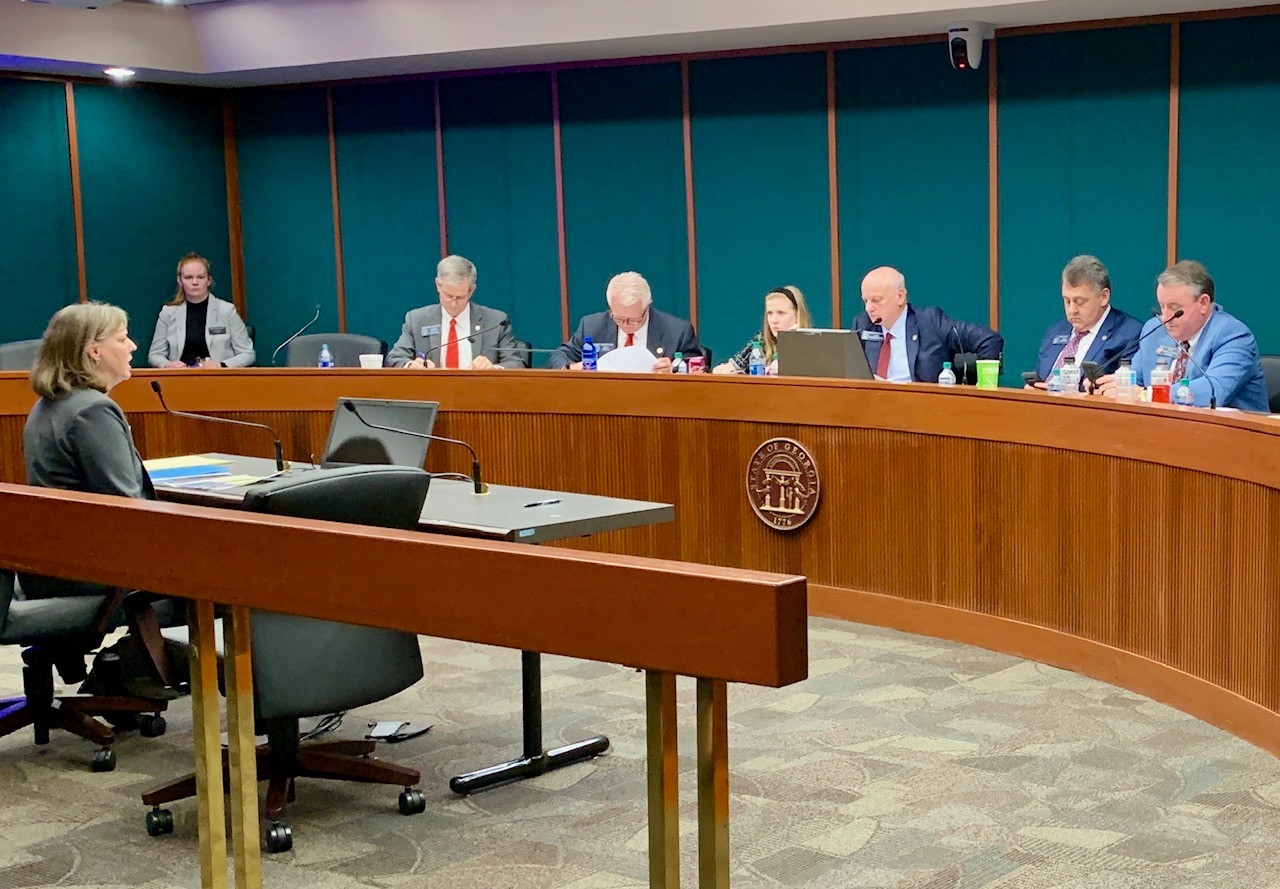
Telling the Senate Transportation Committee that SD 40 residents did not want “Spaghetti Junction on steroids.”
Last week I shared with you that I filed SR 654, which proposes a constitutional amendment permitting the Georgia Department of Transportation (GDOT) to use gas tax revenue for public transit. I filed this legislation because of the multi-billion dollar managed toll-lane project being planned by GDOT for the top end of I-285. Basically, we’re getting a toll road expansion, which no one seems to want, instead of rails and buses, because GDOT is limited by Georgia’s constitution to spending its $2 billion on nothing but roads and bridges. Our constitution is holding us back.
To my surprise and at the very last minute, I got word that SR 654 was scheduled for a hearing in the Senate Transportation Committee. My team scrambled to put together handouts, spread the word, and call experts to testify. Fortunately, the planets aligned, as it was lobby day at the Capitol for pedestrians and cyclists, who happen to be big transit fans. Several were able to attend the Committee Hearing.
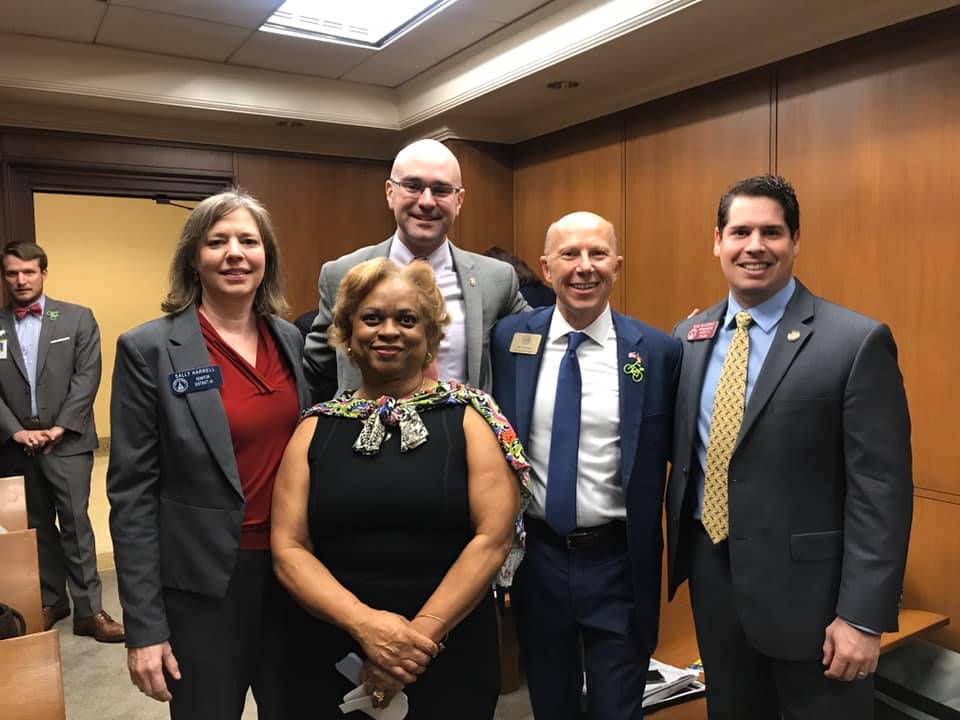
I was happy to see PEDS, a group that advocates for pedestrian-safe society, who were supportive of SR 654 which would provide more funding for public transit.
I’m extremely grateful to Mayor Lynn Deutsch of Dunwoody and Neill Herring of the Sierra Club for coming to testify, and to several Senate 40 constituents who came down to support the bill. Committee members are always on better “behavior” when they know a member’s constituents are in attendance. Together, we were able to pull together an excellent presentation that grabbed the attention of several news outlets.
Passing this constitutional amendment is a heavy lift, but the hearing opened up a productive dialogue with the Senate Transportation Committee about the need for dedicated funding for public transit. Chairman Beach, a fellow Atlanta suburban colleague, pledged to work with me on alternative solutions to public transit funding and I intend to hold him to it.
If you’d Iike to see public transit instead of toll roads, call or email Senator Beach and thank him for holding a hearing on SR 654 and ask him to keep his commitment to find more funding for public transit.
Georgia Kids Can’t Catch a “Break”
Making my case for the After School Recess Act from the Senate well
Last week, I announced my intent to file my “After School Recess Act,” a bill that bans graded homework for students in grades K-2. I’d like this bill to be bipartisan, if at all possible, so I pitched the bill to several of my Senate Republican colleagues. The response so far has been favorable and I got a commitment from the Chairman of the Senate Education Committee for a hearing and vote. This week, I’ll be following up with colleagues that said they’d consider co-sponsoring the bill before I file.
You may recall that the Governor vetoed a bill we passed last year guaranteeing recess for our youngest students, an issue I’ve worked on for decades. If kids don’t get recess during school, we should give parents the ultimate “local control” allowing them full choice in how to spend precious family time.
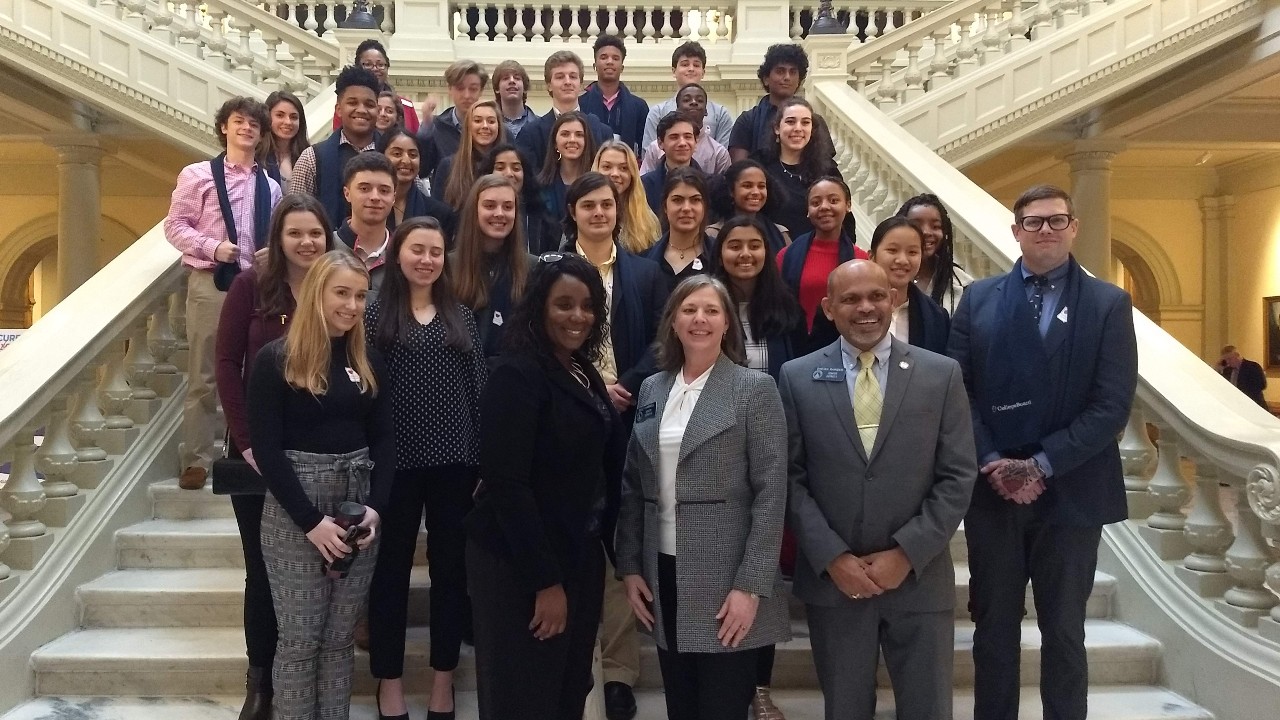
It was a pleasure to speak with this group of Dunwoody High School students on Advanced Placement Day at the capitol, sponsored by the College Board
In-State College Admissions: Higher Education was also high on last week’s agenda as I met with lobbyists from Georgia Tech and the University of Georgia about their opposition to SB 282, a bill that would require Georgia’s designated research universities to allocate at least 90 percent of its early admissions to Georgia residents. Those of us with college-aged kids know how hard it has become for Georgia students to get accepted to our own state-funded schools. Students paying out-of-state tuition bring significant money to our universities. Ninety percent may be a tough benchmark to set, but I appreciate the intent to keep our best and brightest in state.
Ironically, I learned in the Urban Affairs Committee that Georgia’s historically black colleges and universities (HBCUs) have the opposite problem attracting out-of-state students due to the higher tuition rates. Senator Lester Jackson presented a bill to allow Georgia’s HBCUs the ability to offer up to 10 percent of its out of state students waivers to receive in-state tuition. Current law only allows for two percent of out-of-state students to receive in-state tuition.
Annexation, Coal Ash, and Ensuring the Dam Doesn’t Break
Annexation: With 10 cities and three counties in my district, this is an issue I work on quite often. When a parcel of land is annexed into a city, there are many implications to work through, with tax revenues and schools at the top of the list. Last week, I met with Peachtree Corners’ City Manager to discuss border issues with the City of Norcross. And our Dekalb Delegation meeting focused on a bill that we passed last year that separated the annexation of land from the annexation of schools, to prevent an unfortunate situation between the City of Atlanta and Dekalb Schools from happening again. But Governor Kemp vetoed that bill so we are back to the drawing board.
Coal Ash: The Natural Resources Committee unanimously approved SB 123, a bill that would raise the surcharge for dumping coal ash in Georgia from $1/ton to $2.50/ton, putting it on par with other types of dumping surcharges. Coal ash is a growing problem in Georgia. Georgia’s low surcharge brought coal ash from other states posing health risks to communities near the dumping grounds. A higher surcharge will help curb that problem.
That Dam Bill: I enjoy being on the Natural Resources Committee because I learn about things I might not otherwise. Last week, we had a bit of fun with that dam bill, SB 319, about building downstream from Georgia dams. Once a structure is built downstream from a dam, the dam becomes a Level 1 dam which brings a significant amount of state oversight and cost due to the safety concerns for the downstream structures. SB 319 aims to save the state and builders money by requiring structures built downstream to build to a higher standard to survive possible water flow and keep the dam at a Level 2 instead of changing it to a Level 1.
Bill Nigut’s Political Rewind: Did you catch me on Political Rewind discussing my Peachcare Public Option proposal to allow all Georgians to buy in to the state’s popular Peachcare program? If not, you can watch it here.
It’s Not Really a Break
Some committees will still meet during this week’s recess and we will be looking closely at the budget this week alongside Appropriations meetings of both the House & Senate.
We will not publish a Snapshot next week, and will return to our regular schedule the week after.
A Comedy of Errors, But The Show Goes On
The Republican leadership has been slow to release bills to the Senate floor, which allowed me time to focus on the work my district sent me to do. I filed two bills:
SB 339, A Medicaid Public Option: Modeled after Georgia’s successful Peachcare for Kids program — available to ANYONE, no matter your age, income level or insured status. Don’t like your private plan? You have another option!
SR 654, Funding for Public Transit: Proposes a constitutional amendment to allow the Georgia Department of Transportation to use gas tax revenue for public transit.
Unfortunately a stomach bug and a clerical error threw me a couple of curveballs this week. Thanks to a team effort, we were able to overcome them and keep things moving.
Was it Dual Enrollment or a Stomach Bug?
This week, the Georgia Senate passed HB444, which outlines program cuts to Georgia’s highly successful and popular Dual Enrollment program. The program allows motivated high school students to “Move on When Ready,” and take college and technical school classes free of charge, earning credits that count both for college and high school, and was a focus of our previous Lieutenant Governor, Casey Cagle.
Governor Kemp wasted no time last year targeting Dual Enrollment for cuts. The legislature is now fast tracking a bill through that only lets students “Move On” with half as many credits as before.
With college tuition crippling students with debt, Dual Enrollment has been a lifeline for Georgia families, including my own. It’s not an exaggeration to say I am heartsick about these cuts. But the morning the bill came to the Senate floor, I literally woke up sick. I was proud to remotely watch my Senate Democratic Caucus colleagues take up the mantle to defend Dual Enrollment and speak against the bill. Sadly, the bill passed along party lines, and will be going back to the House so that they can either agree or disagree to the changes made by the Senate. Call and email your house Representative and let them know where you stand on these cuts.
Medicaid Public Option and a Clerical Error
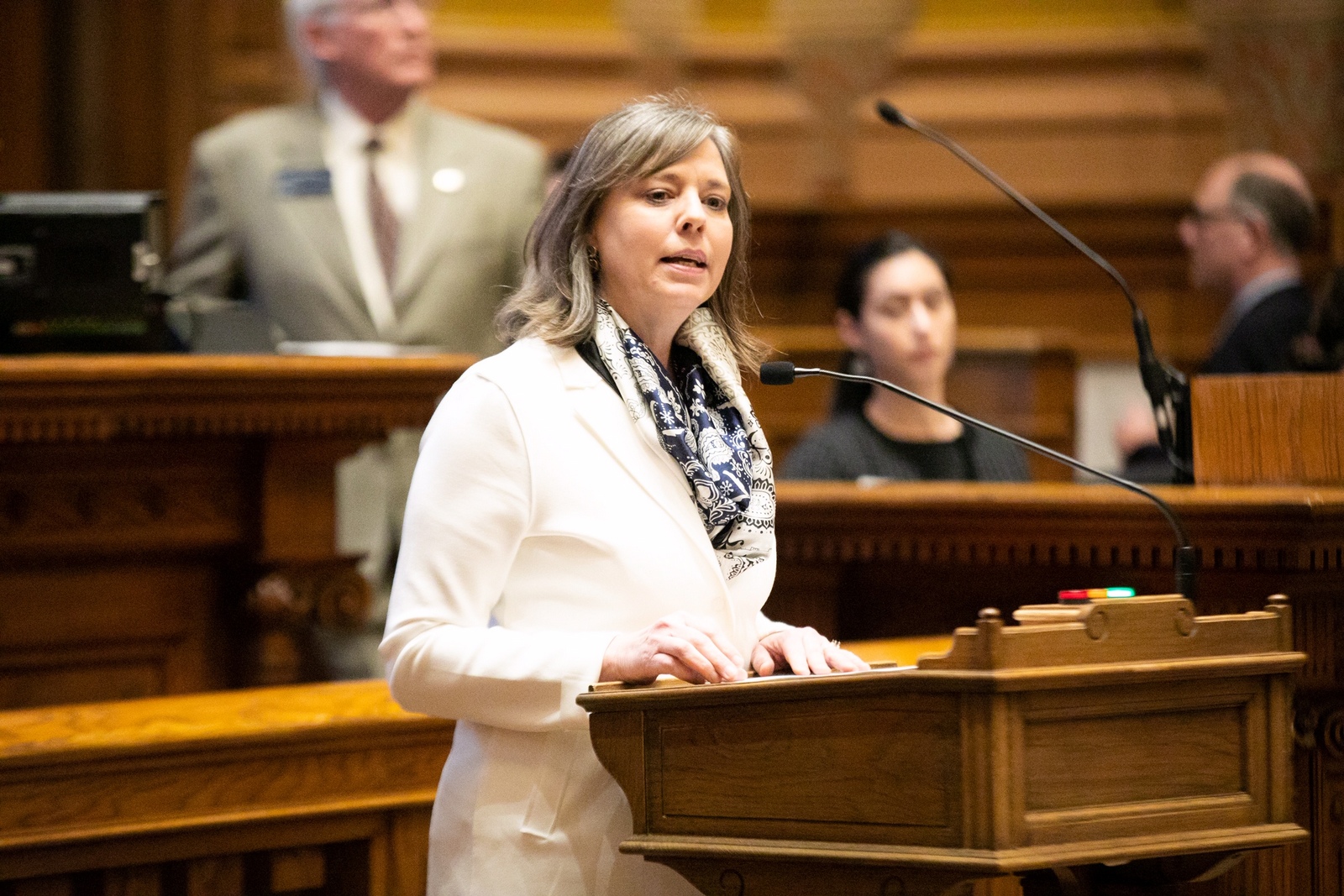
Speaking from the Senate well about the need for a Medicaid Public Option
On Wednesday, I addressed my Senate colleagues after filing my signature piece of legislation for the year — a Medicaid Public Option that would allow ALL Georgians, regardless of age, income, or insurance status, to purchase Medicaid, at the same cost it takes the government to deliver the services.
I’ve heard from a number of constituents who have private plans with such high monthly premiums and deductibles that they have a hard time finding money to pay the doctor. They feel they have to forgo healthcare even though they have insurance. And they often can’t trust their health insurance because they get billed for services they thought were covered.
With a public option, the government sets the price instead of a for-profit company. This keeps prices down, increasing competition in the market to keep costs down for everyone, including those with private plans. The plan is modeled after the popular Peachcare for Kids, and would simply be another option on the marketplace that consumers could choose. Close to 20 other states are taking a serious look at how to make a public option work for them. It’s time Georgia does the same.
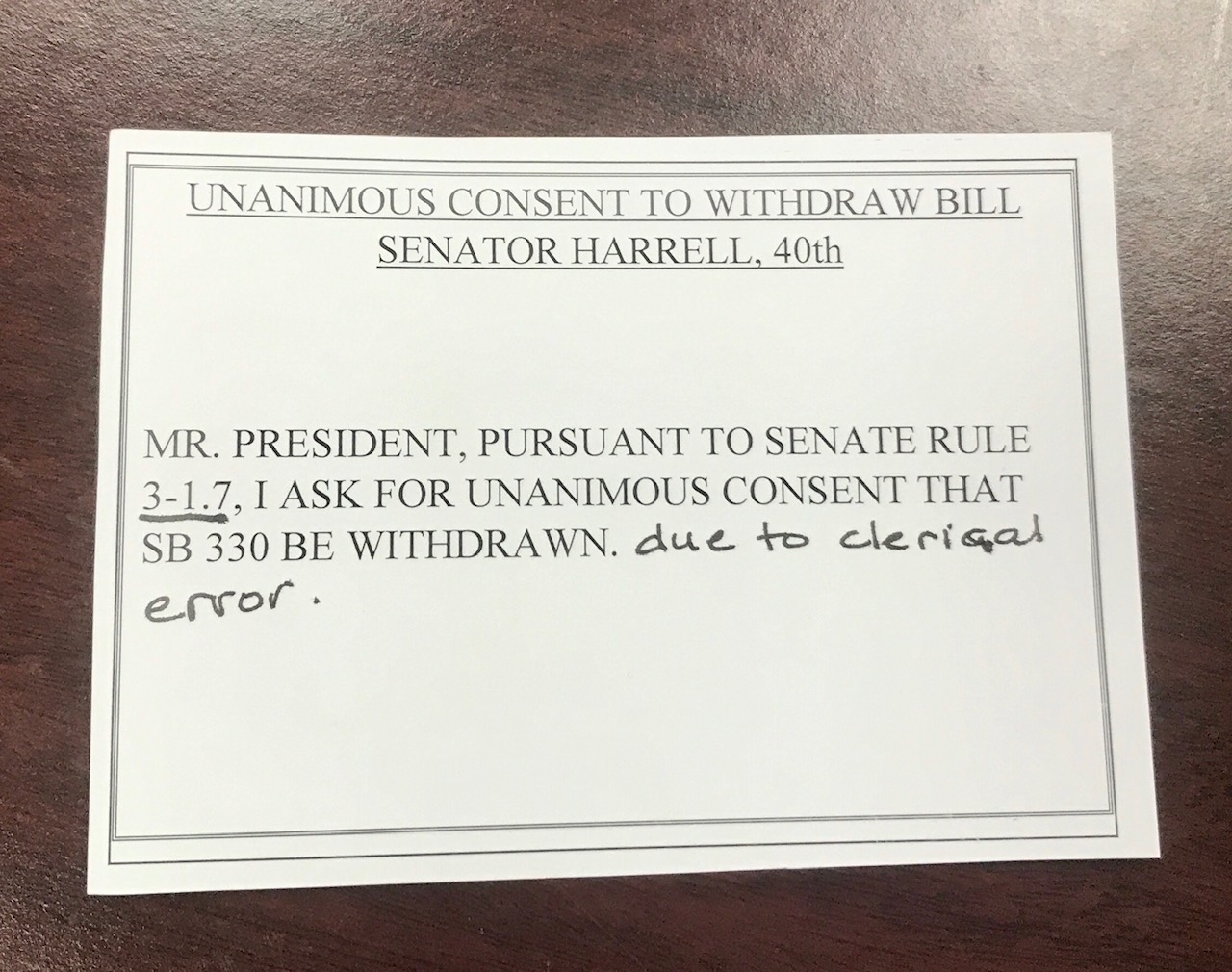
The Secretary of the Senate’s instructions on how to ask for Unanimous Consent to Withdraw a bill
The concept of a Medicaid Public Option is new, so this was not an easy bill to draft. We went through multiple versions — so many in fact, that I inadvertently filed the wrong one! And I learned this week that some mistakes made in the Senate can be fixed!
The Secretary of the Senate gave me a little cheat card with the formal language you must use on the Senate floor to make a motion to withdraw a bill. In the process, I got to see the inner workings of the Secretary of the Senate’s office, including the script that they prepare for the Lt. Governor that guides him as he presides over each day’s session.
A Course Correction, A Bipartisan Success, and Other Matters
Transportation: This week I filed a Constitutional Amendment to allow Georgia’s gas tax to be used for transit. Georgia’s Constitution currently only allows our gas tax to be used for roads and bridges. This is why we’re seeing managed toll roads instead of transit options to solve our traffic woes. Our Constitution is holding us back and we must change course. It won’t be easy — a Constitutional amendment requires two-thirds of the vote in each chamber and a ballot referendum. But it is time for that fight.
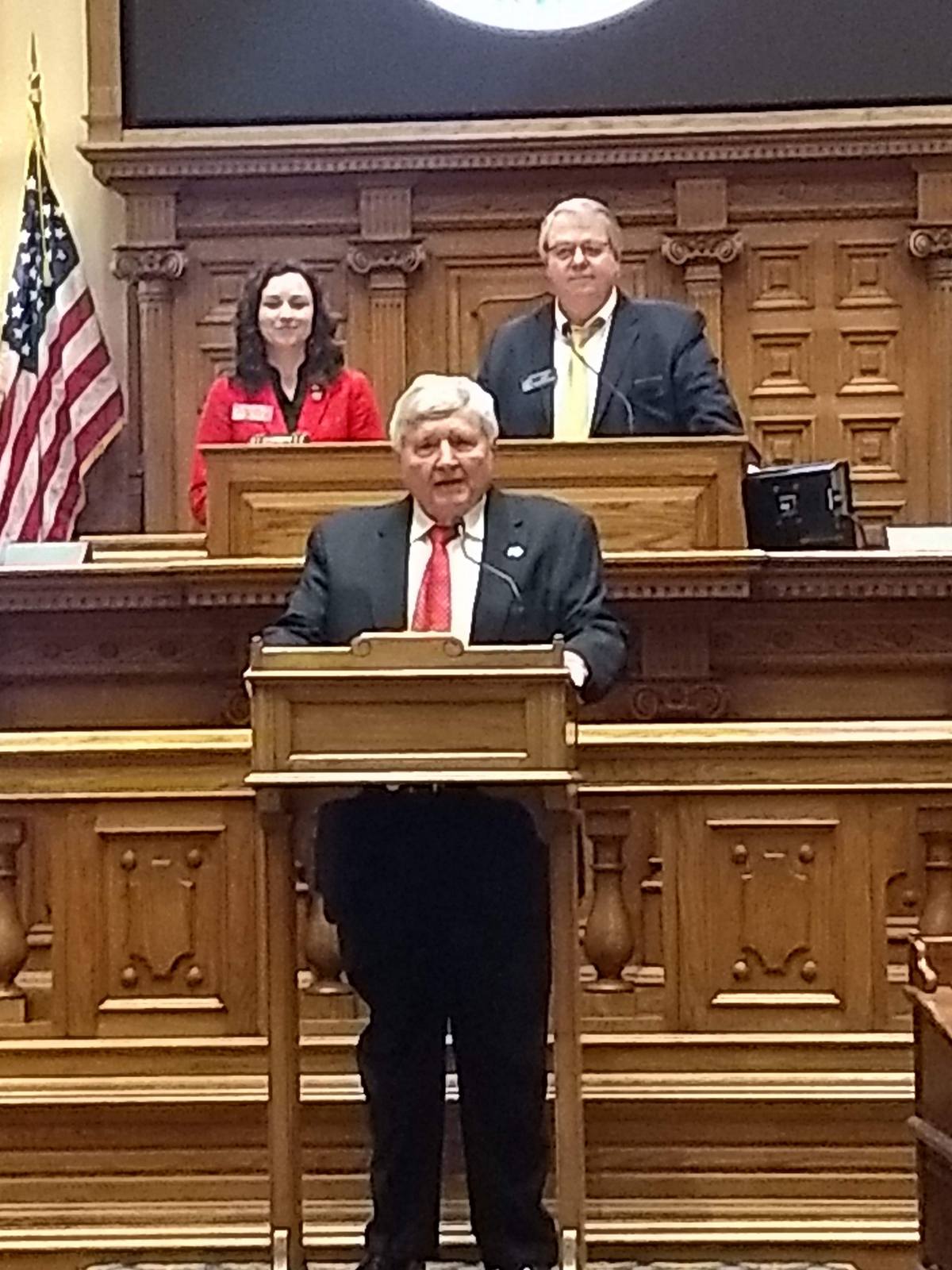
Elected with bi-partisan support, GDOT Board Member Rudy Bowen addresses the 7th Congressional District Delegation, with Chair Sen. Steve Henson and Secretary Rep. Beth Moore.
Speaking of transportation, it’s not often that Republicans and Democrats can all agree on something, so it was nice to participate in a rare example this week as the Gwinnett County Delegation voted unanimously to re-appoint Rudy Bowen, a long-time public servant, to represent the 7th Congressional District on the Georgia Department of Transportation Board.
Gangs: This week, the House and Senate Public Safety Committees held a joint meeting to learn more about gangs, a major focus of the Governor. Young kids are being recruited into gangs as early as elementary school age, so we must focus on ensuring Georgia’s most vulnerable kids see a better path through education and positive programming.We can’t arrest our way out of this problem, and we must tread thoughtfully and carefully. Georgia already has some of the toughest laws on the books. We must make sure that Governor Kemp’s efforts on gangs don’t undo the great progress former Governor Deal made during his term on criminal justice reform.
We’ll be monitoring this issue closely.
What’s on Deck?
We only have five more days officially scheduled for this session, which will bring us to day 14. House Speaker Ralston held off on releasing the remainder of the calendar until he saw the Governor’s budget proposal. It’s anybody’s guess what happens from here!
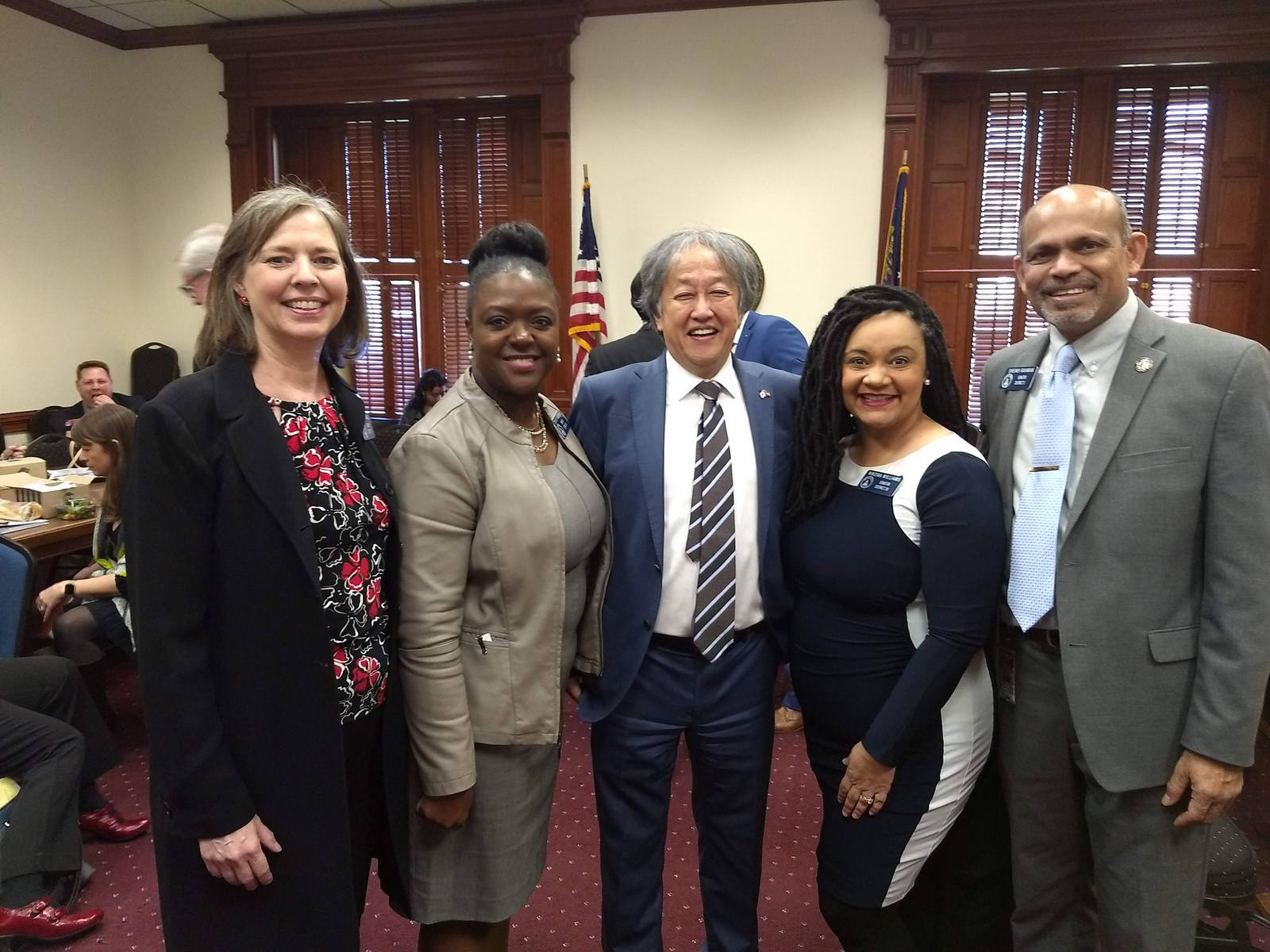
It was a pleasure to visit with CG Takeuchi, our new Japanese Consulate of Atlanta while having lunch with the Japan Caucus.

Good to visit with local elected officials from Chamblee, Norcross, Doraville & Tucker at Georgia Municipal Association Day at the Capitol.
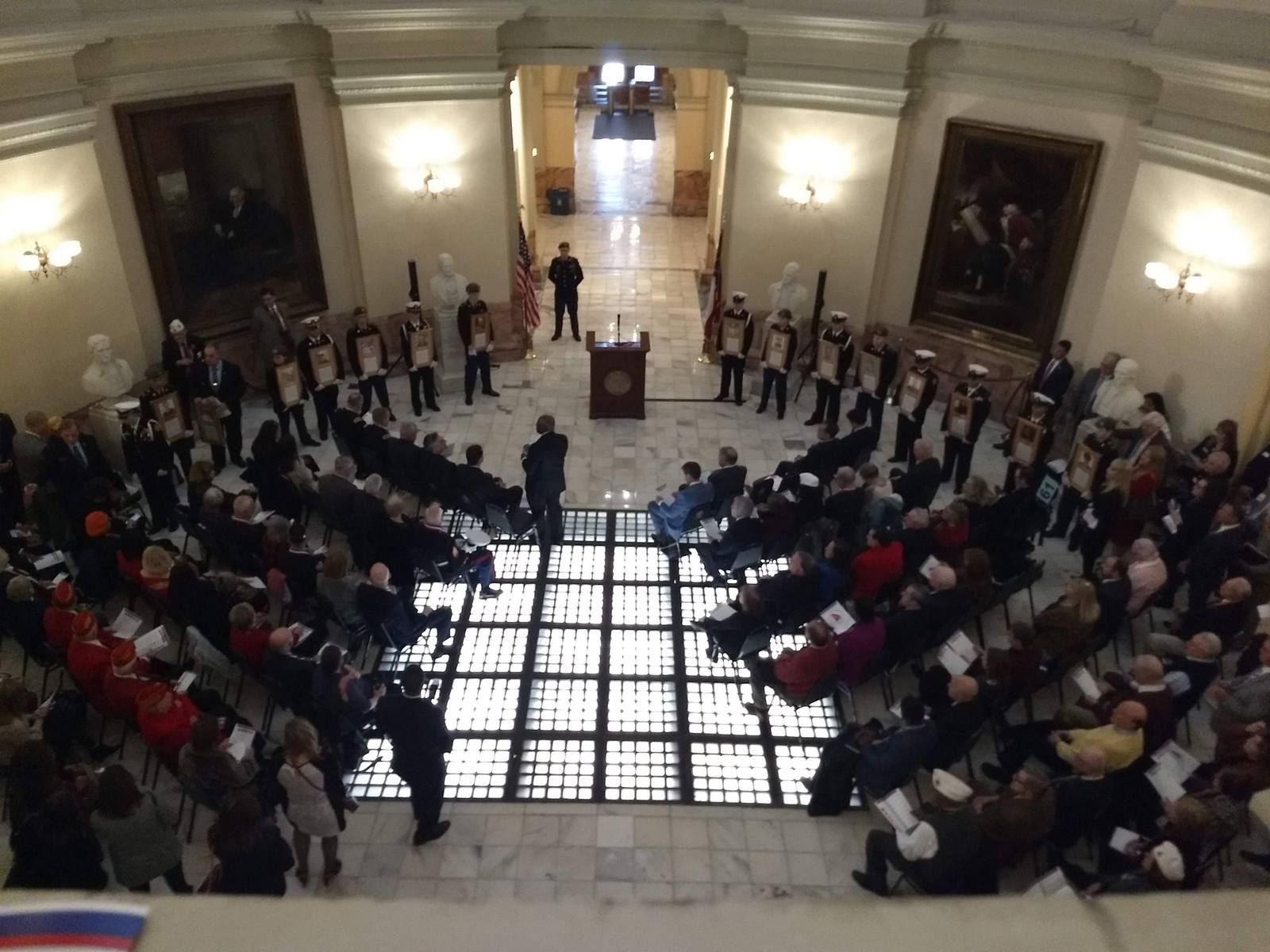
A beautiful event where my colleague Sen. Harbison was honored at the Georgia Military Veterans Hall of Fame Class of 2019 unveiling ceremony.
The Battle of the Budget
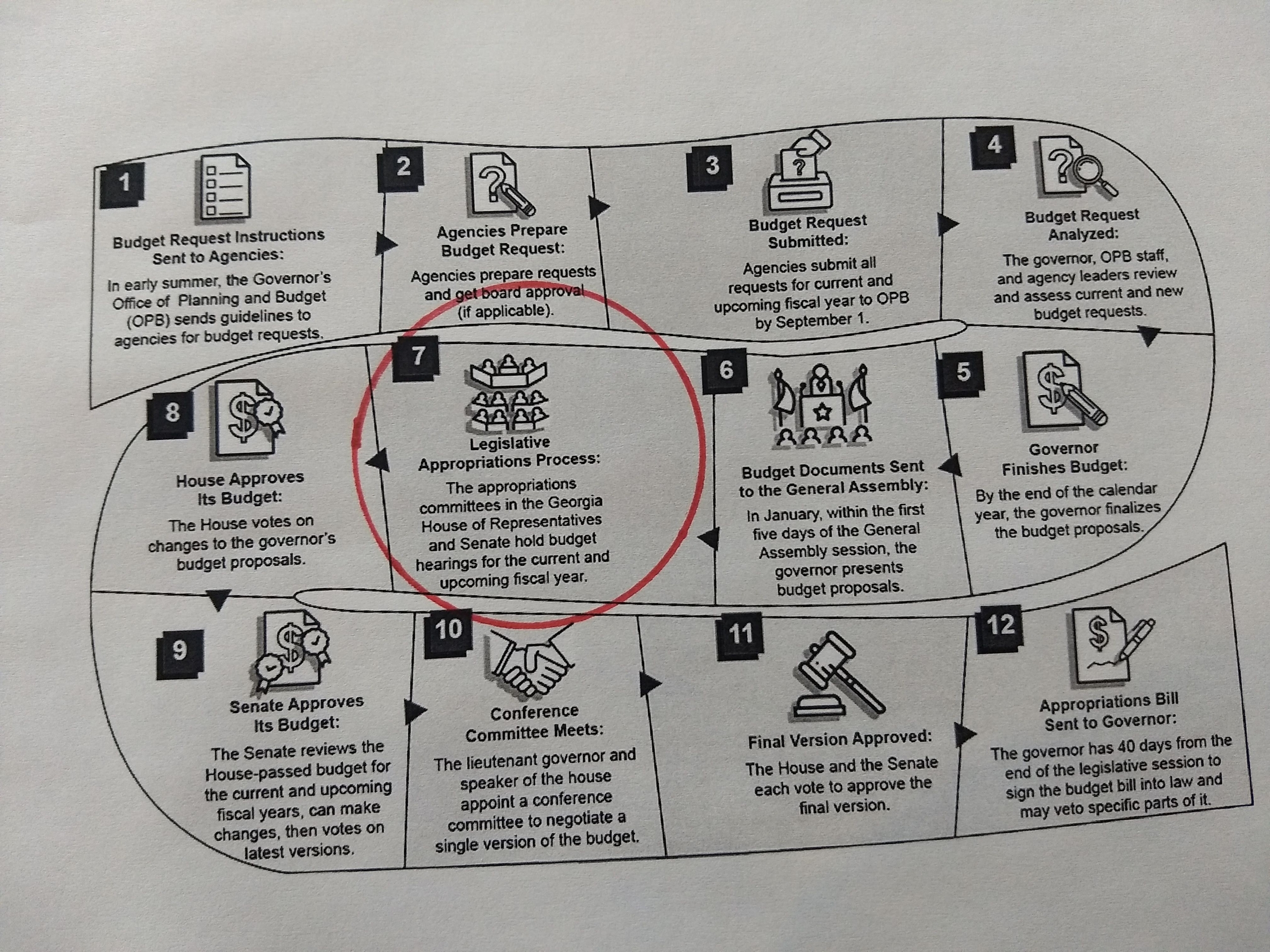
Georgia Budget Process – you are here.
The Georgia General Assembly traditionally holds budget hearings the second week of session, but the tone of these hearings was far from normal. The Budget Battle started last fall when the Governor ordered 4% cuts to the budget the legislature passed last year. Speaker Ralston responded by calling the entire House Appropriations Committee to Atlanta last fall. Then this month, he decided to pay the daily per diem of the entire House of Representatives — not just members of the Appropriations Committee — encouraging ALL Representatives to attend the hearings (sadly, the Senate did not do the same). Finally, the Speaker announced that he will not release a full session calendar until he has a sense of where the budget talks are going.
It took both me and my Communications Director, Amy Swygert, working full-time this week to cover both the budget hearings and some important in-district meetings. When Amy and I met to compare notes, we both realized the events of the week brought to our minds certain well known idioms.
“Don’t Count Your Chickens Before They Hatch”
Perhaps for the first time in Georgia’s history, despite strong economic times, we’re in major belt-tightening mode. This is because in 2018, Republican lawmakers counted on a windfall from President Trump’s federal tax package and passed an income state tax cut, while also doubling the state’s standard deduction. Revenues came up short, and now we have the painful task of deciding what we must do without.
“Pennywise and a Pound Foolish”
Governor Kemp has downplayed his proposed budget cuts, emphasizing the “common sense savings.” The truth is that our state departments have always looked for operational efficiencies. They come in every budget. The harsh reality is that this budget includes cuts at the expense of everyday Georgians.
Here’s just some of what we’re facing:
— There will be deep cuts to services that have been proven to help mentally ill patients stay in their homes, pay their bills, and avoid psychiatric emergencies. The Department of Behavioral Health & Developmental Disabilities warned that cuts to these preventive services could increase suicides and substance abuse. And it will put an enormous strain on the already overwhelming demand on our psychiatric hospitals and mental health facilities.
—- There will be significantly less money to monitor diseases and address Georgia’s already dismal maternal mortality and HIV rates. County health departments, which are the only health entity in some of our rural counties, will be the hardest hit.
— Our food, animals, and meat will be inspected less frequently.
— The Georgia Bureau of Investigation will have fewer resources to process the more than 44,000 backlogged crime lab cases. This means certain criminals who could have been prosecuted will roam our streets instead.
— There will be fewer public safety officers and staff in our prisons.
— There will be less money for public defenders and accountability courts which have been proven to reduce the number of repeat offenders
— The Georgia Board of Health Care Workforce will cut numerous initiatives such as loan repayment and medical education that seeks to improve access to medical physicians and specialists in mostly rural, underserved areas.
— As they presented their budgets, some department heads mentioned challenges with costly staff turnover because Georgia pays its employees sometimes as much as 40% under market rate.
Republicans and Democrats alike were dismayed at the proposed cuts. Lawmakers have worked hard to fund these important initiatives only to see them gutted. Representative Al Williams remarked “Whether you end up paying on the front end or the back end, it’s going to cost you.”
According to Georgia’s constitution, budget bills must originate in the House of Representatives. The first bill to make its way through the House will be the FY-2020 amended budget, followed by a second bill containing the FY-2021 budget.
“All Politics is Local”
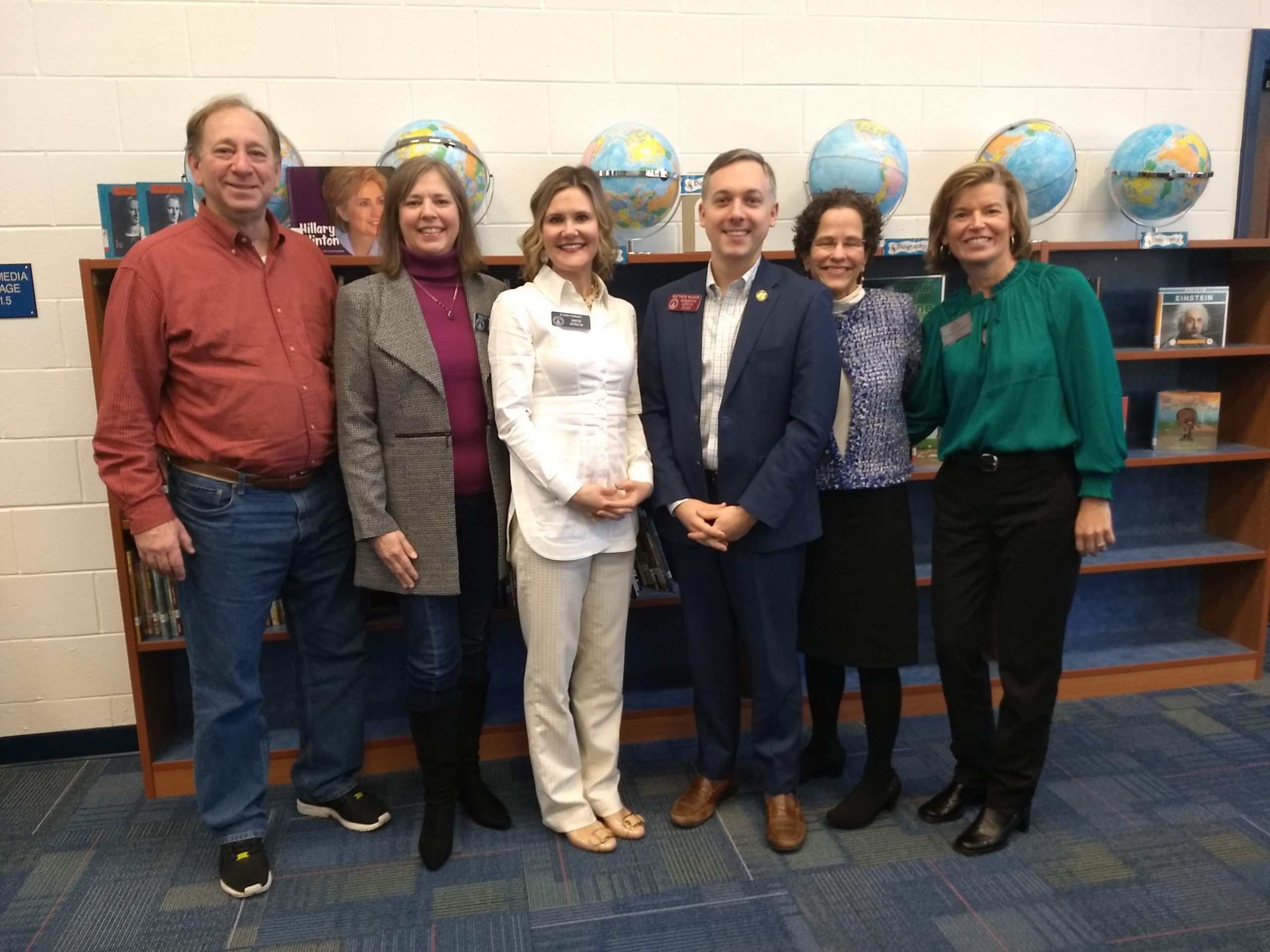
ELPC & Peachtree Gateway Parent Council Legislative Forum
This week I joined several of my Dekalb colleagues to provide a legislative update at a joint meeting of the Emory LaVista Parents Council and the Peachtree Gateway Council on Schools to talk to parents around the district about education. Teacher salaries, testing waivers, dyslexia services, portable classroom conditions, and dual enrollment cuts were just a few of the topics we covered.
I also attended the Georgia Department of Transportation’s public information meeting in Chamblee about the top-end 285 toll lanes project which impacts most of my district. There I viewed a video animation of what the entire project will look like from west (Paces Ferry Road) up 400 north (North Springs) to east (Henderson Road). I was struck by the enormity of the project and the lack of long-term vision. We must eventually work toward traffic solutions that do not cater to single occupancy cars. I will have more about this issue in later “Snapshots.”
“Be True to Your Values”
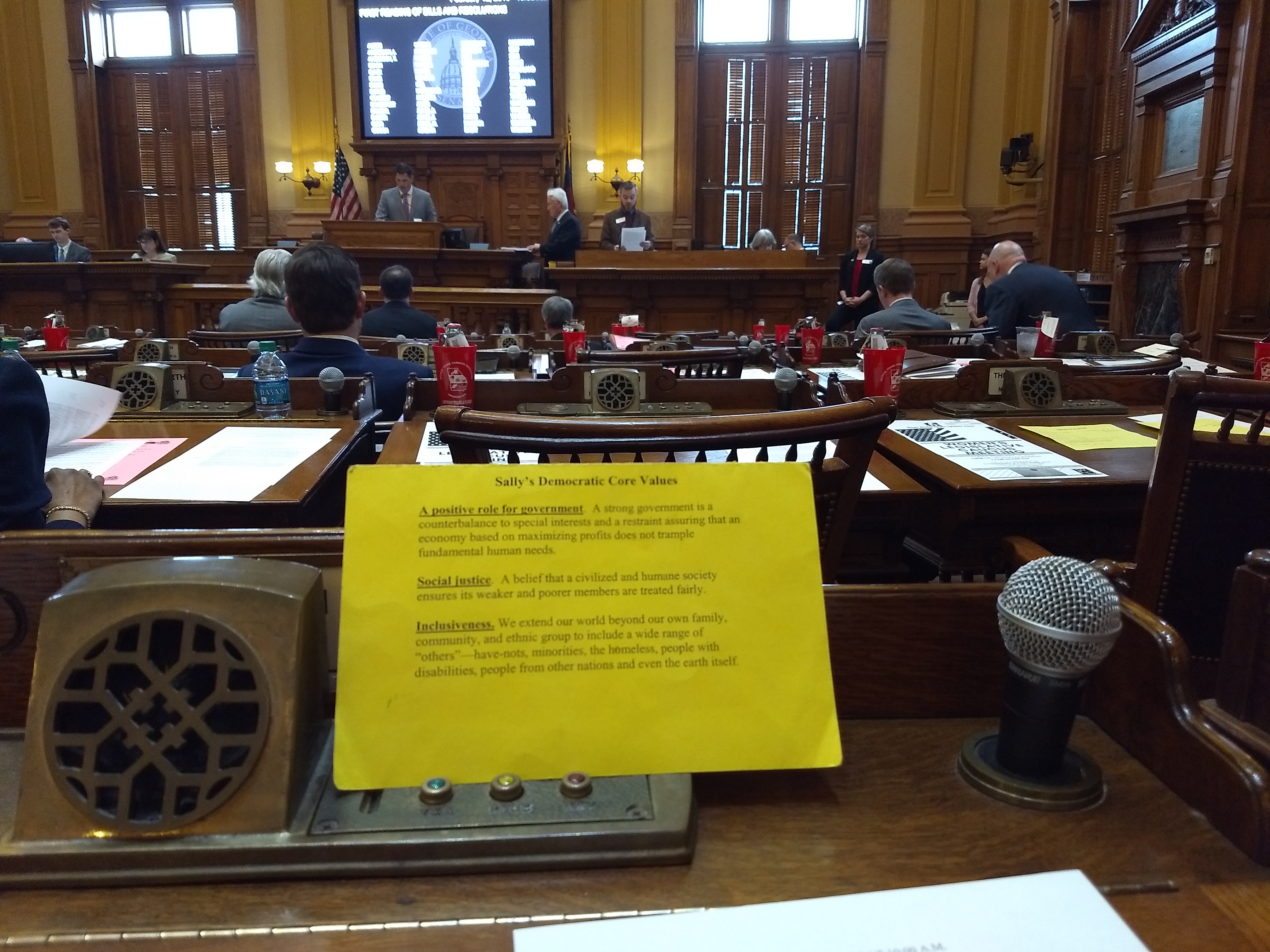
My yellow values card guides my decisions during my time in the Senate
Next week, as the session begins in earnest, I will start rolling out my legislative agenda which is rooted in my core values — my trusty yellow card that I keep on my Senate desk — and based on feedback from you. The bills I’ll be filing are aimed at increasing access to affordable healthcare, improving education opportunities for all, and protecting our children and our earth.
I’m excited to share more details with you in the weeks ahead.
Already Making Sausage
Otto von Bismarck is famous for his quote, “If you like laws and sausages, you should never watch either being made.” Because bills filed in 2019 carry over into 2020, the 155th Georgia General Assembly wasted no time in getting the sausage-making going again.
Changing the Sausage Recipe
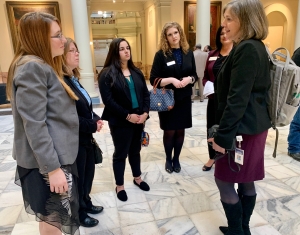
Chatting with Social Work students from Dalton State about my path from BSW student to state Senator
Bills that lack the power and push from the Governor’s office have a slower start to life. Likewise, bills that the Governor pushes can race right through the process like a greased pig. That’s why I spent the weekend prior to the 2020 session training Indivisible Advocates on how to utilize their networks to agitate and inspire the bill making process.
The second year of the biennium is fraught with political posturing since every member of the legislature is up for re-election (yes, that includes the Senate). But this environment actually provides a ripe breeding ground for making your voices heard. Even a handful of postcards or phone calls to a targeted legislator can bring an issue to the forefront, or strategically inject doubt.
If a bill you support is not getting traction, don’t fret. Passing a bill into law is not the only measure of success. Sometimes bills are filed to generate discussion, or to move the needle of public opinion. And if there’s a bill you oppose, by all means, BE LOUD and agitate, even if you live in a district where you don’t feel heard. Let your legislator know you’re there.
Organic Sausage is Best
The “Hopper” where bills are collected before they are read on the Senate floor and assigned to a committee
A bill begins with an idea. Sadly, many bills today are created by conservative “model bill” factories that provide fill-in-the-blank templates for legislators. But not all bills are made in a factory; better ones are home-grown. This week I dropped in the “hopper” two bills that came directly from conversations I had with constituents.
Local Control: At a Dunwoody town hall meeting, a constituent expressed concern about a new law mandating that all cities allow for wood construction in their building codes. This was clearly an example of an industry lobby pushing their agenda that directly conflicts with our cities’ abilities to set their own standards. I filed SB 292 to repeal that law and restore local control.
Speedy Tax Refunds: Another constituent asked me why it took so long to get his tax refund. When I called the Georgia Department of Revenue to find out, they couldn’t give me a good answer. So I sponsored SB 290, a bill that reduces the time it would take for Georgians to receive their tax refunds from 90 days to 30 days.
The Governor’s Sausage
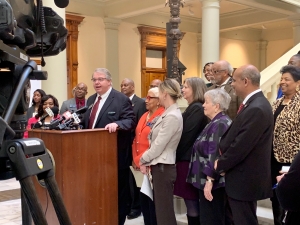
Standing with the Senate Democratic Caucus at a press conference giving the Democratic response to the Governor’s State of the State Address
On Thursday, Governor Kemp laid out his priorities at the State of the State Address. But he was silent on our looming fiscal crisis. Georgia has always been a well managed, fiscally conservative state because we have purposefully underestimated our annual revenue estimates. But now for the first time, we’re facing revenue shortfalls thanks to Republican-created state tax cuts and overly optimistic revenue projections. Legislators in 2018 cut the income tax, trusting that a Trump tax reform windfall would fill the gap. But it did not, so we’re now having to find ways to raise revenue and make tough spending cuts.
Online Sales Tax: The Senate passed its first bill this year which will allow Georgia to collect more sales tax from Internet and app sales, just like we do for brick and mortar stores. This will help make up some of our revenue shortfall.
Dual Enrollment: Highschool kids who enroll in college classes are about to become the first victims of budget cuts. The Senate Higher Education Committee passed the latest version of HB 444. The bill restricts the number of credits that can be earned, the types of classes that can be taken, and limits enrollment to only 11th & 12th graders (current students are at least partially grandfathered in). I voted against the bill.
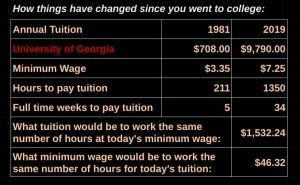
UGA Tuition vs Minimum Wage, 1981 and 2019
Cost of College: Rising tuition was not mentioned in the Governor’s speech this week, but it was high on my mind so I went to the Senate well to remind my colleagues that too many promising young Georgians are having to choose between taking on enormous debt for a college degree, or not going to college at all. My husband Jay and I now have two kids in college, and we are discovering all kinds of back-door tuition increases. Did you know in 1981, it was possible to pay for a year of college tuition with a summer job earning minimum wage? Today, young adults would have to earn $46/hour at a summer job to be able to pay for a year of tuition at the University of Georgia. College costs have skyrocketed while Georgia’s minimum wage, among the lowest in the country, lags woefully behind the times.
DeKalb Sausage
Dekalb Ethics: Now that voters rejected the very controversial proposal to revamp Dekalb County’s Ethics Process, the Dekalb House and Senate Delegations are working together for a solution. While many people want us to simply fix the Board appointment process that was rejected by the courts, there clearly are concerns among delegation members about the current process. A joint House and Senate Task Force will work through those concerns to come up with a solution.
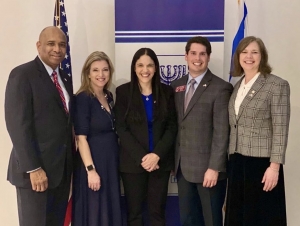
I enjoyed a wonderful dinner with the Consulate General of Israel to the Southeastern United States, Anat Sultan-Dadon, and some of my Democratic colleagues.
Sausage Aside…
I look forward to seeing those of you concerned about the Georgia Department of Transportation top-end I-285 toll lane project at as many of the upcoming public information meetings as my schedule allows.
With the help of some of my constituents, I’m working with the Center for Pan Asian Studies to recruit pages, who spend a day at the capitol delivering messages to Senators inside the chamber. If you know someone who is interested in serving as a Senate page, please apply here.
And as always, please come to the Capitol for a visit! To set up a visit, or to get a message to me, please call my Administrative Assistant, Keridan Ogletree, at 770-463-2260.
Gearing Up
Welcome to Sally’s Senate Snapshot 2020! It’s an enormous election year with so many important offices to fill, not the least of which is the Oval Office. But we must remember that what we’ve done together the last three years to increase civic engagement is just as important to our democracy as what happens in the White House.
Our system of government works better when citizens are actively engaged, so I encourage you to get involved and BE LOUD on issues that are important to you. During the legislative session, our weekly “Senate Snapshot” will give you an insider’s view of what’s happening under the Gold Dome.
Getting Ready
Georgia’s State Constitution mandates that our General Assembly begin its session the second Monday of January, which this year is the 13th. This year I expect the 40-day session to move quickly, ending by late March, as legislators return home to campaign for the May 19th primaries. The first priority will be to pass a state budget, which is the only thing our constitution requires of the General Assembly. This will be a tough budget year with tax revenue down and an already lean budget. We’ll have more details about that next week.
This year, my legislative agenda has very much been shaped by input from my constituents. The rising cost of healthcare and higher education, concerns about our earth’s future, and the safety and well-being of our children are all issues I’ll be tackling. I’m excited to share more in the weeks ahead.
 Greet the Team
Given the priority I’m placing on communications, I’m happy to report that Amy Swygert will be joining me again this year as my Communications Director. Amy has nearly three decades of communications experience that she’ll be using to keep all of you informed and to help amplify my work. Amy often helps me cover bases when I can’t be available. You can reach her at amy@sallyharrell.org.
 Laurie Lanning, who has been a devoted volunteer since the beginning of my campaign, will serve as my Political Director this session. She’ll be keeping her ear to the ground and monitoring the issue based messages we get from you. You can reach Laurie at laurie@sallyharrell.org.
Keridan Ogletree joins the team as Administrative Assistant to both me and Senator Tonya Anderson. Keridan is a Georgia native and recent Georgia State political science graduate. Keridan will be on the front lines answering phone calls and helping to address constituent needs. You can reach her at (404) 463-2260 or Keridan.Ogletree@senate.ga.gov.
We love to have guests! If your schedule allows, please come and visit us at the Capitol!
Giving the Green
Lastly, beginning Monday I cannot accept political contributions until after the session is over. So if you’d like to donate, please do so by midnight Sunday January 12th. Qualifications to get on the ballot for the 2020 elections begin March 5th, so this is our last chance to discourage serious opponents by filling up our coffers.
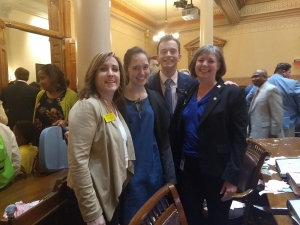
Sally’s 2019 Legislative staff from left to right: Amy, Elizabeth and Peter.
In the season of budding leaves, final exams, and tax returns, I want to pause for a few minutes to thank you for sending me to the Georgia State Capitol to be your voice. I am profoundly appreciative and honored to have been given that responsibility, and I hope that I rose to the challenge. While it was a much tougher legislative session than we all anticipated, it was still a pleasure to be there, at least on most days!
In my final email for the 2019 legislative session, I thought I’d share my reflections — the surprises, the wins and the losses.
Also, Rep. Scott Holcomb and I will host a Townhall meeting Wednesday, April 24th, 7pm, at Livsey Elementary School, 4137 Livsey Road, Tucker.
The Biggest Surprise — Georgia Bans Abortions
Having grown up with Roe v. Wade in effect, it’s hard to imagine living in a country where abortions are illegal. Like many of us, until recently I took reproductive freedom for granted. I never imagined that a bill like HB481, the “heartbeat” bill that bans abortion at around 6-weeks, (before most women know they are pregnant) could pass the Georgia legislature. But I was incredibly proud of how forcefully the women of Georgia — doctors, mothers, and young women alike — spoke up against this hurtful, insensitive bill that won’t stop abortions. It will only stop safe abortions. The silver lining is that we’re already seeing that the backlash is fueling the recruitment of progressive candidates — particularly women — who will undoubtedly run successful campaigns to join the legislature in 2021.
What We Did Right — the Budget
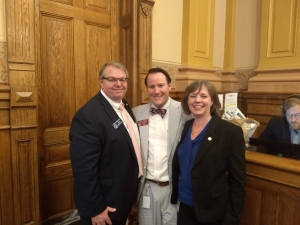
Sine Die with Minority Leader Sen. Steve Henson and Rep. Scott Holcomb.
I’ve always been proud of Georgia’s fiscal health and I have great respect for Senator Jack Hill, who has chaired the Senate Appropriations Committee for a couple of decades. Sen. Hill knows the ins and outs of Georgia’s budget, and runs a very orderly process. This year’s budget passed with very little controversy, with teachers and mental health being the biggest winners. While 2018 was the first time in more than a decade that the education budget did not include austerity cuts, in subsequent years, we must do more for education. We must update the state’s Quality Basic Education formula, the spending per student ratio that dictates how we fund our schools. Georgia’s QBE formula is decades old and desperately needs an overhaul. But overall, Georgia is a fiscally sound state, as we have had good budget leaders for as long as I can remember.
The Biggest Win — No School Vouchers
The biggest win this year was blocking the passage of the Governor’s school voucher bill that would have been devastating to our already underfunded public schools. The original SB173 did not pass on the first go, and had we not flipped three Senate districts in 2017 and 2018 (Senate 6, 40 and 48), the outcome would have been different. SB173 almost gained a second life when it was attached to another education bill. We all thought arms would be twisted to get that bill through, but it never got to the Senate floor because the Republican leadership simply didn’t have the votes.
While I’m glad we did no harm to our public schools, the school voucher bill was a good reminder that we still need solutions for families whose needs aren’t being met in the public schools. Thank you to those who reached out to me to tell me your stories. Know that I heard you. The other big win this year was the dyslexia bill, a bill that my predecessor worked hard on. Now all Georgia school children will be screened for dyslexia and receive early intervention, and Georgia’s teachers will be better armed to help kids with dyslexia. I’d love to see a similar approach to other types of learning disabilities. This is how we fix public schools, not by taking money away and giving it to private schools.
The Biggest Disappointment — Georgia Ambulance Services
During my campaign, I learned of some very distressing issues regarding slow ambulance response times. So I was pleased to learn about HB264, which sought to address some of the governance issues that impact ambulance contracts. It was a good bill that many people worked very hard on, including family members of victims who died while waiting for an ambulance to arrive. I was excited to vote it out of the Senate Ethics Committee. On Sine Die, I was crushed to read the Conference Committee Report on HB264. Several unrelated bills had been added to HB264 as amendments, including an amendment that attempted to weaken campaign finance laws by allowing large increases in PAC contributions. These last minute shenanigans were totally disrespectful to the legislative process, and to the victims. Ultimately, HB264 did not pass this year, so I am motivated to help clean the bill up next year.
The Biggest Area for Improvement — Healthcare
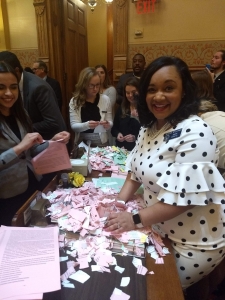
Sen. Nikema Williams, Chair of the Georgia Democratic Party, prepares her confetti for the last moments of Sine Die.
While there were some healthcare wins, such as Medical Marijuana Oil and Needle Exchange programs, we did not get the overhaul of Georgia’s healthcare system that is so desperately needed. Although our hospitals seemed pleased that the Governor was finally willing to introduce a weak Medicaid Waiver bill, the bar remains very low. And while a compromise was reached regarding the CON regulatory system, for-profit healthcare still got huge exceptions written into the law. Access to affordable healthcare for everyone needs to continue to be a top priority for candidates as we go in to 2020 elections.
The Most Concerning Bill — School Safety
SB15 came out of the work of the Senate School Safety Study Committee, which in the aftermath of the Parkland, Florida school shootings, held six meetings throughout the state during 2018. The bill seeks to prevent tragedies by requiring threat assessments, drills and coordination among various authorities and governments. While on the surface it all sounds necessary and good, I have concerns about unintended consequences in its implementation. The bill mandates the collection and sharing of sensitive information and suspicious behavior, but does not define “reasonable suspicions,” which opens the door to broad interpretation and potential discrimination of minorities. It also weakens due process. I fear this could lead to increased imprisonment and deportation of people of color. I will continue to work with organizations such as Project South to track implementation issues requiring legislative action.
The Biggest Loser — Transportation
Transportation in Georgia became this year’s biggest political football. HB511 began as an ambitious proposal to create a coordinated statewide approach to public transit that would consolidate several state transportation agencies, raise money for public transit through a flat tax on ridesharing services, and allow local areas to raise taxes for transit projects which would have been a welcome opportunity for Georgia’s cities and rural areas. But when it stalled in the Senate Transportation Committee, it was combined with two other politically-sensitive topics — a jet fuel tax exemption for Georgia-based airlines and an airport authority that would oversee all of Georgia’s major airports, turning SB131 into a massive “frankenbill.” These types of bills normally don’t fare well and this one was no exception. It never came back to the Senate floor for a vote.
Looking Ahead
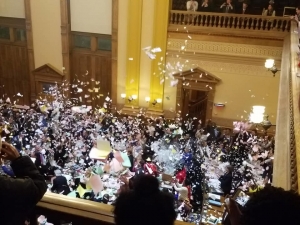
Sine Die – until next year!
Because this was the first year of Georgia’s 2019/2020 legislative session, we have a lot of unfinished business. Bills that were not passed this year still have a chance of passing next year. I look forward to returning to the Capitol next year to keep pushing for gun safety reform, education opportunities, and better solutions to Georgia’s healthcare. Until then, I’ll be continuing discussions with constituents and local leaders through meetings and events throughout Senate District 40. Stay tuned to my Senate Facebook page to see where I’ll be. I’m also checking my Senate email, so please feel free to reach out at sally.harrell@senate.ga.gov. I’d love to hear from you.
Tuesday is Sine Die
The last day of the 40-day legislative session is called Sine Die, Latin for “without a day,” meaning that the body adjourns without appointing a day to return. Sine Die is the trickiest day of the session, as bills sent over to the House begin returning back to the Senate with changes made, and the Senate must quickly vote to “agree or disagree” to those changes. It’s a perfect time to slip something controversial into a bill in hopes that no one will notice.
Georgia’s legislature is set up as a Biennium, or two year process. All bills introduced this year automatically roll over and can still be passed next year.
The Man Behind the Curtain
In previous Snapshots, I’ve mentioned the forces that influence the legislative process. But I haven’t talked much about one of the most powerful — Georgia’s Governor.
I have not seen Governor Kemp since the beginning of the session, but for the last few weeks, I’ve very much felt his presence. The Governor is the driving force behind a number of bills that advance his agenda, and his House and Senate floor leaders work to make that happen.
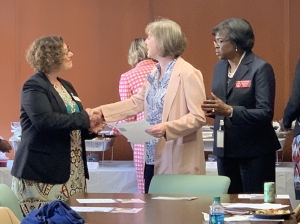
Welcoming our guest speaker from the National Association of Women’s Business Owners to the Women’s Legislative Caucus weekly meeting with co-Chair, Rep. Pam Dickerson
This week, I personally bumped up against the Governor’s agenda more than any other time in the session. I watched the Chair of the Higher Ed Committee act on behalf of the Governor by passing a bill out of Committee that had huge unresolved issues, cutting Georgia’s popular Dual Enrollment program (fortunately the bill was tabled on the Senate floor). The Chair of the Public Safety Committee told me that the Governor wouldn’t let him hold a hearing on my Campus Carry repeal bill. And throughout the week, we waited to hear whether Governor Kemp and Speaker Ralston would be able to whip enough votes in the House to pass HB481, the 6-week abortion ban. Sadly, this bill passed 92 to 78. Earlier in the session, the Governor pushed the voting machine bill, and though we defeated school vouchers on the floor of the Senate, the Governor’s voucher bill has been attached to another bill that’s on the Senate calendar for Sine Die.
The only force more powerful than the Governor is you — your voice and your vote. Imagine the impact of picking up 15 more House seats! Continue to put pressure on Senator Albers to advance SB50 to repeal Campus Carry. Write postcards to the Governor letting him know you want better gun safety laws in Georgia. The work doesn’t stop because the legislative session is over. Continue to BE LOUD on issues important to you.
We’re Feeling the Heat!
At 4am Monday morning, my family awoke to the red lights of fire trucks and a dozen firemen running up my neighbor’s driveway. Thankfully no one was hurt and the fire was contained. But it was one of those life experiences you never want to have.
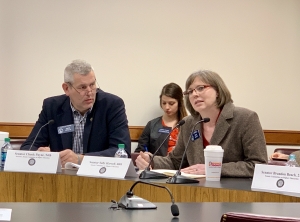
Expressing concerns about a new version of the Dual Enrollment bill that we were given at the start of the meeting
The scene at the Capitol was not much less chaotic. Not only did we feel the heat from the Governor, but committees and local governments raced to get bills passed before the end of our final full week. Bill substitutes and amendments were drafted at warp speed as last minute bill changes were made.
I was especially busy this week working to get local legislation for counties and cities in my district to the finish line. The week ended with marathon chamber sessions. Normally, we consider anywhere from three to 15 bills per day, but on Friday, day 39, we had 50 bills on the schedule!
Dealings with the DeKalb Delegation
DeKalb County Charter: Members of DeKalb’s Delegation joined DeKalb CEO Michael Thurmond for an executive order signing ceremony to start DeKalb’s charter review process. It’s been a long time since DeKalb’s charter has been reviewed. Now a 17-member Charter Review Commission will conduct a thorough review of DeKalb’s governance model and service delivery.
Digging Deeper into Procurement: This week I filed SB 264, designed to make DeKalb’s procurement process more transparent by changing how procurement rules are set. Currently, the DeKalb CEO has the sole authority to set procurement rules; SB264 allows the Commission a voice in the process. A similar law to enhance procurement oversight passed in 2015, but a voter referendum was never held. The DeKalb Commission recently passed a resolution 6-0, with one abstention, in favor of a new effort for enhanced oversight. Once the bill is signed and approved by members of the DeKalb delegation, it will be on the Presidential primary ballot for DeKalb voters to approve.
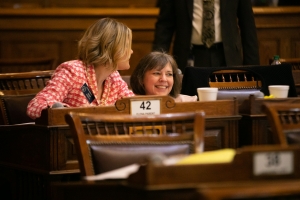
A quick pow wow with Senator Elena Parent in the Senate chamber
Dug-In About Ethics: The DeKalb House and Senate delegations worked to pass a bill to re-establish DeKalb’s Board of Ethics after the Georgia Supreme Court ruled the 2016 Ethics law unconstitutional. Early this session, the Senate delegation unanimously passed SB 7, a strong bill that addressed the concerns that the Ethics board should be appointed by elected officials rather than private groups. But the bill did not fare well in the House delegation and they ultimately passed a much weaker version. Negotiations are now underway to strengthen the bill again. I will not support a weak Ethics bill.
Something Fishy in Fulton
Do Fish Vote in Roswell? I got a surprise this week when I learned that a tiny part of the City of Roswell extends into Senate District 40. It happens to be underwater in the middle of the Chattahoochee River, but it officially means that I have a vote in the Roswell delegation, the 10th city in my district. Senator John Albers, who represents most of Roswell, asked me to sign a bill increasing Roswell’s hotel/motel tax. I decided to leverage my new fish constituency to do some horsetrading. I told Sen. Albers, who is also Chair of the Public Safety Committee where SB50, my Campus carry repeal bill, was assigned, that I would sign the bill if he agreed to hold a hearing on SB50. To my dismay, he told me that Governor Kemp wouldn’t let him hold a hearing. After some intense negotiation, he finally agreed to help me get the Lt. Governor on board with a study committee on Campus Carry. We’ll just have to hold him to his word. If only the fish in the Chattahoochee could help.
Fulton Industrial Boulevard: The Fulton County delegation spent hours intensely debating whether the unincorporated Fulton Industrial district should be annexed into the city of Atlanta or the city of South Fulton, an issue that’s been contested for years. Because of two North Fulton precincts in SD 40, I had a vote in this debate. In the end, I supported annexing the area into the city of South Fulton. It came down to the schools in the area, which are currently being served by Fulton County Schools. While the City of Atlanta promised not to grab $10M of revenue from Fulton County Schools by annexing the area into Atlanta, I felt this issue needed to be resolved.
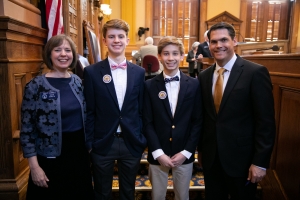
I enjoyed having Sam Veith and William Duncan from Senate District 40 serve as Senate pages this week
What About Brookhaven & Chamblee? Both Brookhaven & Chamblee residents will have the opportunity to vote on whether they want some homestead exemption property tax relief. Also, Brookhaven’s voters will have the opportunity in 2019 to vote on whether or not they want to extend the amount of time mayors can serve from two to three terms. I felt it was important for voters to weigh in on this decision through a referendum, as the original Brookhaven city charter limited the mayor’s service to two terms.
Games in Gwinnett
Gwinnett’s Next MARTA Vote, 2026?!: It’s common knowledge that you can impact the outcome of a referendum by choosing an election date with low voter turnout. This is why Gwinnett’s MARTA vote was held in March of 2019. Now, the Republican members of the Gwinnett delegation (Kirby, Barr, Rich, Efstration, Harrell & Clark) want to ban any more MARTA referendums until 2026. And they did this by amending a simple little GDOT bill, SB200. How’s that for progress, Gwinnett? Vote them OUT in 2020!
Come Visit!
If you are able, please come visit the Capitol on Sine Die, Tuesday, April 2! We’ll start the day at 10 am and we’ll most likely still be voting late into the evening. You can watch from the 4th floor balcony. Let me know you’re there by sending a page note to me from the 3rd floor rope area. I’ll come out and say hi.
 I’m pleased to be co-hosting several town hall meetings with House Representatives in various parts of Senate District 40 so that we can update you on the legislative session, answer your questions, and hear your thoughts.
 I’m honored to serve on Representative Lucy McBath’s Census Complete Count Leadership Committee. Our charge is to make sure everyone is counted in the year’s Census, especially in hard-to-count areas.
 Getting paged to go outside the chamber to meet constituents is my favorite part of the day. People at the capitol often refer to this activity as “working the ropes,” because citizens must stay behind the ropes that protect the Senate chamber doors. I can always tell the nervous look of someone who is at the ropes for the first time and I love putting them at ease, helping to make it a positive experience.
 This week
  My legislative agenda gained some momentum this week when I got word that three of my bills will be heard in committee next week. I’m particularly grateful to Senator Jack Hill, whom I have known since I served in the House, for allowing me time Monday morning to present
  Representative Beth Moore and I have been collaborating on a bill to ban the sale or distribution of products that contain asbestos. The bill was inspired by a constituent whose wife died of Mesothelioma, a terrible and deadly form of cancer that is primarily caused by asbestos exposure.
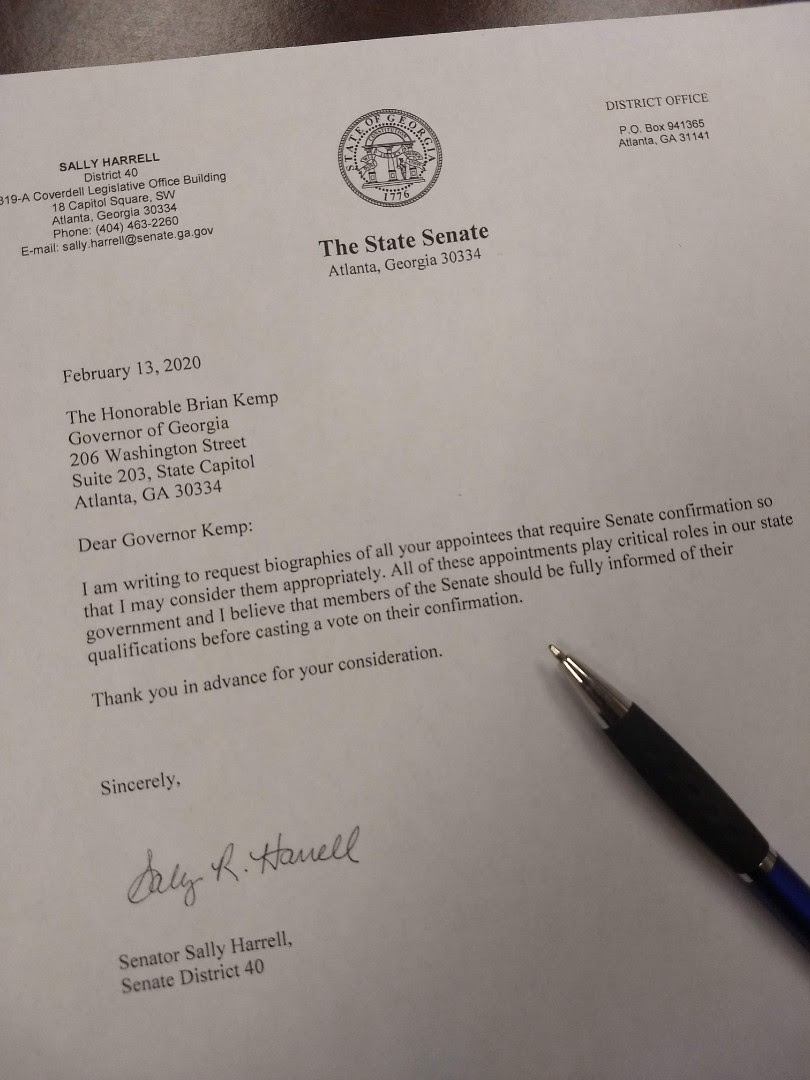 Checks and balances, or the lack thereof, have continued to be a theme this week. After refusing to provide Speaker Ralston budget information the House needs to do its job, this week the Governor’s office initially refused to give me information that I need so I know how to vote on Senate confirmation of board appointees. Last week I made a written request for bios for all board appointees. On Monday morning my administrative assistant, Keridan, got a call from the Governor’s office. They said if I want the bios, I must file an open records request.
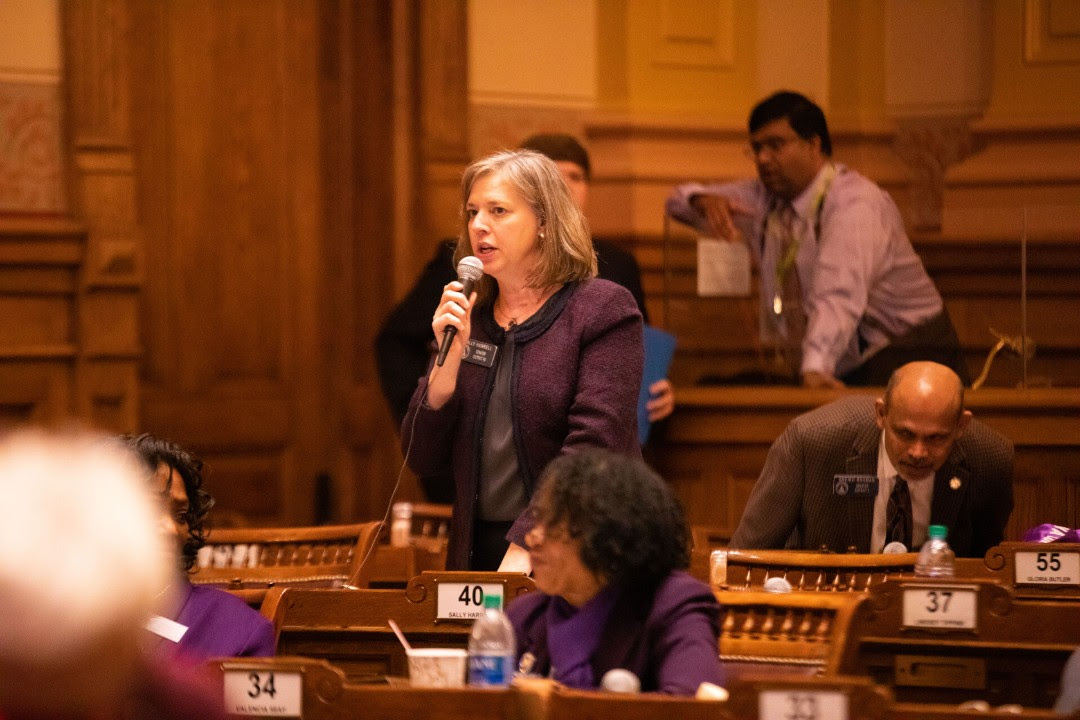 Roll Call: Even the roll call is ceremonial. If a member is absent, another member must make a motion on their behalf to excuse, using specific language: “Mr. President, I ask for unanimous consent to excuse the Senator from the 39th for business inside the Capitol.” After all the motions to excuse are made and approved, we vote electronically to signify our presence.
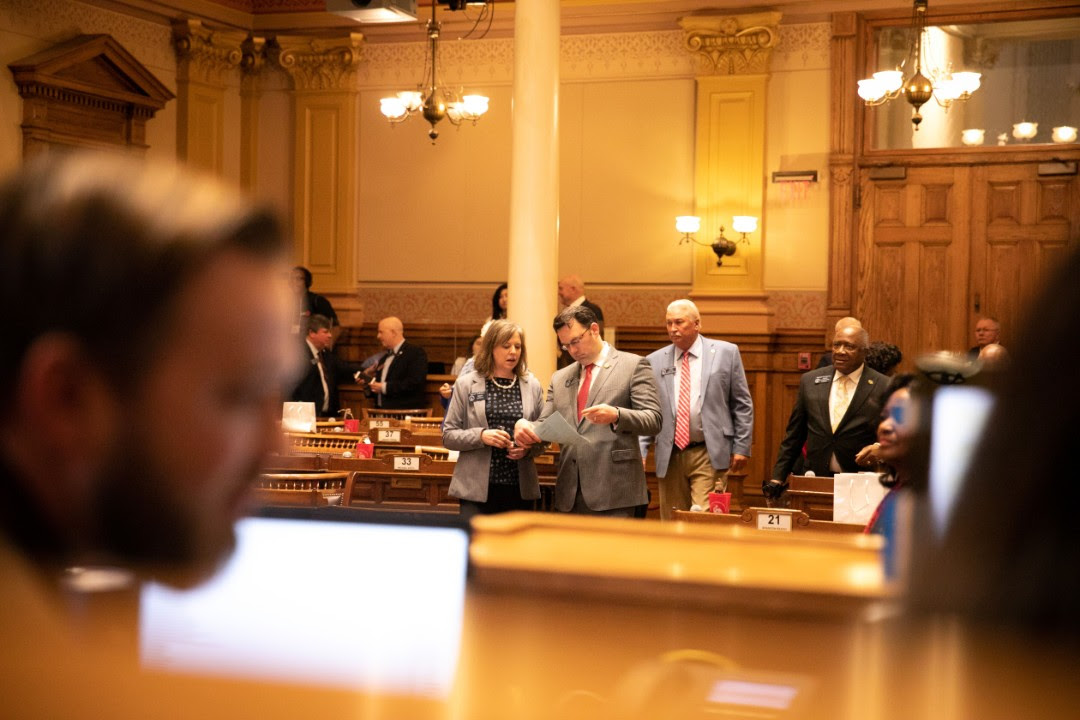 Point of Personal Privilege: The favorite part of the day for Senators who like to be in the spotlight are Points of Personal Privilege. Every Senator gets five minutes in the well each day to say whatever they want. Some members use it to recognize special guests. Others use it to mark a special occasion or speak to an important issue. Members of the minority party often use it to make a case for legislation they’ve filed, since there’s less chance of that legislation being heard on the floor.